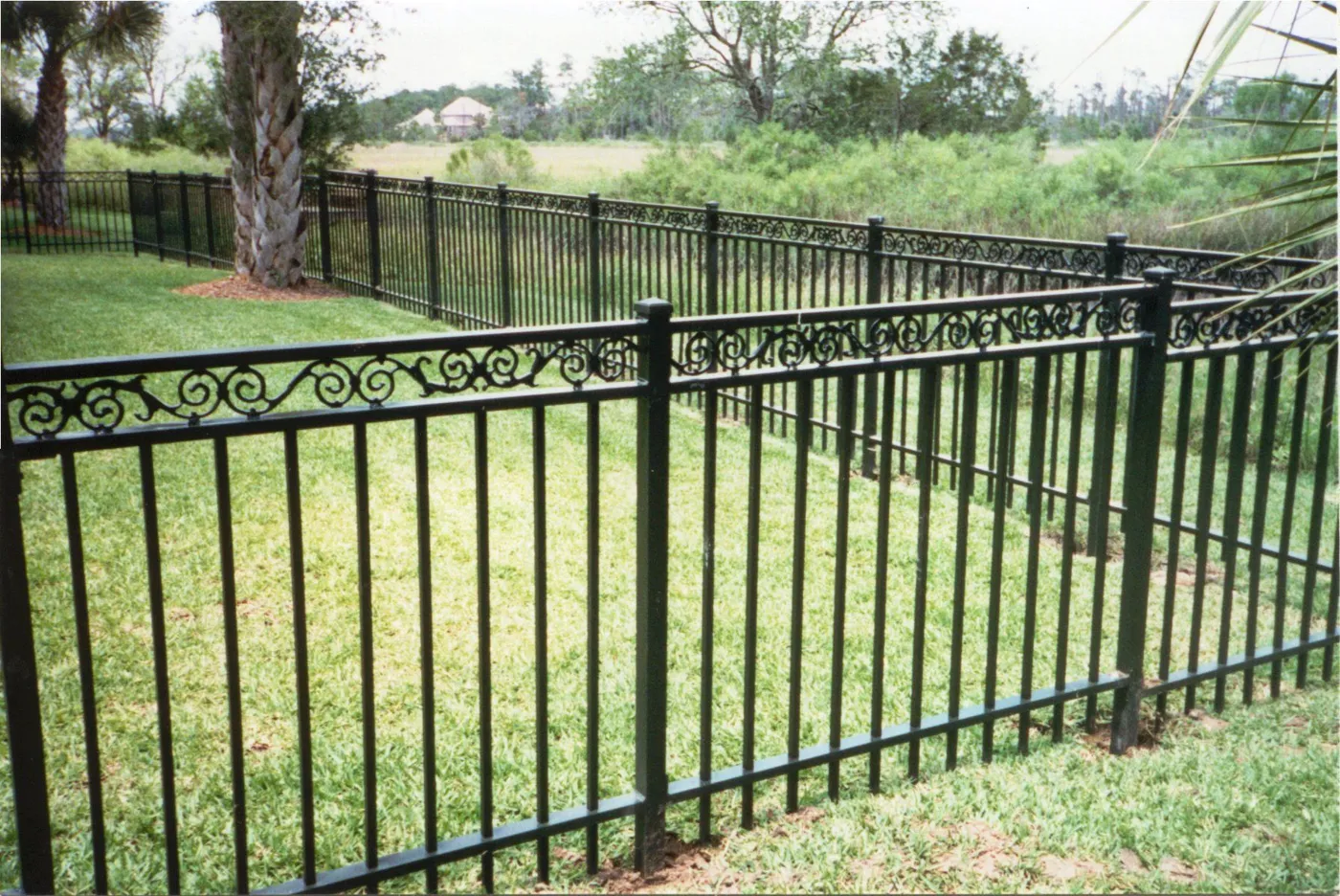
Yes. On a slope the fence is either racked, meaning the rails tilt to follow the ground, or stepped, meaning flat panels drop in stages. Most of Lubbock is flat, so the hard yards here are the canyon lots at Ransom Canyon and Buffalo Springs, yards that fall toward a playa basin, and ground with caliche near the surface.
Racked or stepped: which is better?
- Racked: rails run parallel to the ground and pickets stay plumb. It suits mild grades and keeps the bottom gap small, which is what dog owners want.
- Stepped: every panel sits level and the line drops at each post. Steep ground and many factory panels call for it. Expect a wedge of open space below each panel.
- Built in place: pickets are trimmed one by one to the grade. It is the neatest finish for a wood fence on uneven ground.
I have a dog that digs and a yard that drops. How do I avoid gaps?
Choose a racked or built-in-place fence so the bottom edge follows the ground, then block the digging. A treated rot board along the base, a strip of wire mesh buried under the line, or a narrow concrete mow strip all work. Sandy soil is easy for a dog to move, so the barrier needs to go below the surface.
My yard is steep and rocky and two companies turned the job down. Who does this?
Rock is normal on the canyon lots southeast of Lubbock, where yards sit on or below the edge of the caprock. Up on the flat, a thick caliche layer can be nearly as hard. Posts in rock need holes cored with a rock bit or posts anchored to the stone. That is slower and costs more than digging in soil, and some crews pass on it. We walk the line and tell you what it will take before we quote.
Do installers dig by hand or with a machine?
Both ways. A power auger handles open ground and most caliche. Crews dig by hand beside house slabs, close to utility marks, around sprinkler lines and along alley fences where gas and communication lines often run.
For a price on your own fence line, book a free on-site estimate. Call (806) 450-4251 or text us a photo of the yard.